Quick Answer
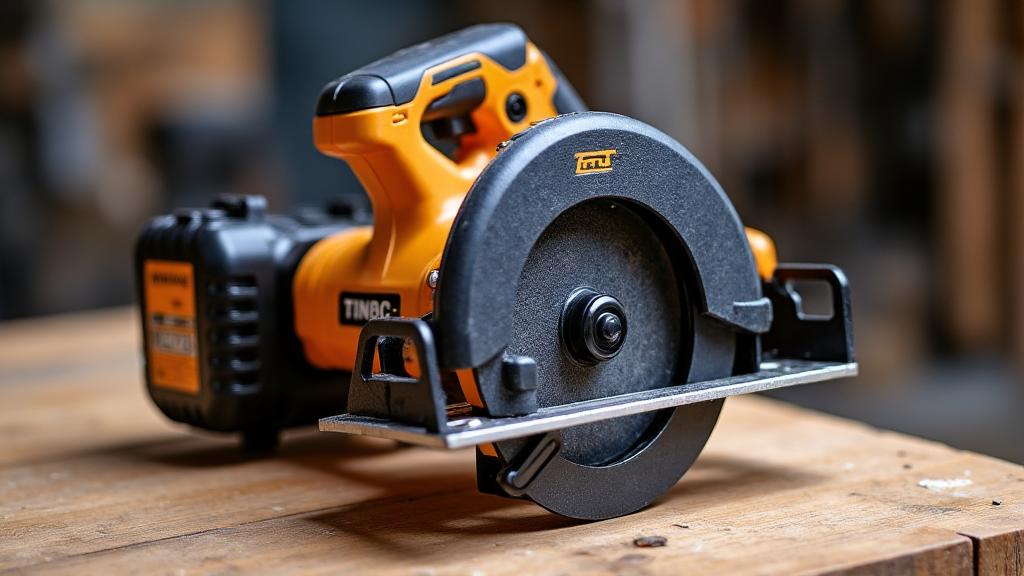
A battery-powered circular saw frees you from cords and outlets, making it ideal for jobsite work or remote DIY projects. These saws run on rechargeable batteries (commonly 18V or 20V max) and come in blade sizes typically 6-1/2 or 7-1/4 inches. To choose the right one, match blade size to your common material thickness, prioritize brushless motors for efficiency, and consider the battery system you already own.
Main Explanation
What to Look for in a Battery-Powered Circular Saw
Blade Size – Most cordless circular saws use either a 6-1/2" or 7-1/4" blade. A 6-1/2" saw (like the DEKOPRO 20V model) is lighter and cuts through 2x lumber, while a 7-1/4" saw handles deeper cuts and thicker stock. Motor Type – Brushless motors are more efficient and deliver longer run time per charge. SKIL offers brushless models in both 6-1/2" (CR6413B) and 7-1/4" (CR5440B) sizes. Battery System – If you already own tools from a platform like DeWalt, Milwaukee, or Ryobi, staying within that battery family saves money and simplifies charging. The DeWalt 20V Max 6.5" saw is one option compatible with the DeWalt battery platform. Power & Speed – Saw speed is measured in RPM. The DEKOPRO 20V saw runs at 4500 RPM, which is typical for a 6-1/2" cordless model. ### Decision Framework: Choosing Your Cordless Circular Saw
Follow these five ordered steps to pick the saw that fits your work:
- Identify Your Most Common Cut Depth – If you only cut 2x lumber and plywood, a 6-1/2" saw is sufficient and lighter. If you need to cut 4x4s or stacked material, choose a 7-1/4" saw.
- Check Your Existing Battery Platform – Stick with the brand you already use for other tools to avoid buying extra batteries and chargers.
- Decide Between Brushed and Brushless – Brushless motors cost more but run longer and require less maintenance. 4. Look for Key Features – Common features include an electric brake, rafter hook, and blade wrench storage.
- Set a Budget and Compare Kits – Some kits include two batteries and a charger (e.g., DEKOPRO 20V kit includes 2 x 4.0Ah batteries). Others are tool-only, expecting you to supply batteries.
- Wear Safety Gear – Safety glasses, hearing protection, and gloves. Over 40,000 power-saw injuries occur each year in the US. 3. Adjust the Depth and Bevel – Set blade depth to 1/4 inch deeper than the material thickness. Loosen the bevel adjustment for angled cuts.
- Mark Your Cut Line – Use a square or straightedge to draw a clear line.
- Position the Saw – Place the base plate flat on the workpiece, with the blade aligned to the waste side of the line.
- Start the Saw and Cut – Hold the saw with both hands. Squeeze the trigger and let the blade reach full speed before contacting the wood. Push forward steadily, keeping the blade on the line. 7. Release the Trigger and Wait – Let the blade stop completely before lifting the saw from the material.
- The SKIL CR540601 and the Kobalt KCS 6524B-03 are noted as affordable or mid-sized options with good performance. - Always let the blade reach full RPM before cutting to prevent binding and kickback.
- Practice on scrap material first to get a feel for the saw's weight and trigger response.
- Amazon – Cordless Circular Saw With Battery And Charger
- SKIL – Circular Saws
- TechGearLab – Best Cordless Circular Saws Lab Tested & Ranked
- YouTube – How To Use A Circular Saw For Beginners
- Breezing Through – Circular Saw Tutorial
- OneVanTool – How to Use a Circular Saw: Step-by-Step Guide for Beginners
How to Use a Battery-Powered Circular Saw (Step-by-Step)
Based on a beginner guide: 1. Read the Manual – Each saw has specific safety and adjustment instructions.