Quick Answer
A dust shroud fits over your angle grinder's wheel and connects to a vacuum to capture dust at the source, keeping your workspace cleaner and helping you meet OSHA silica exposure limits. Choose a shroud that matches your grinder size, collar size, and has a replaceable brush skirt for effective dust control. ## Main Explanation
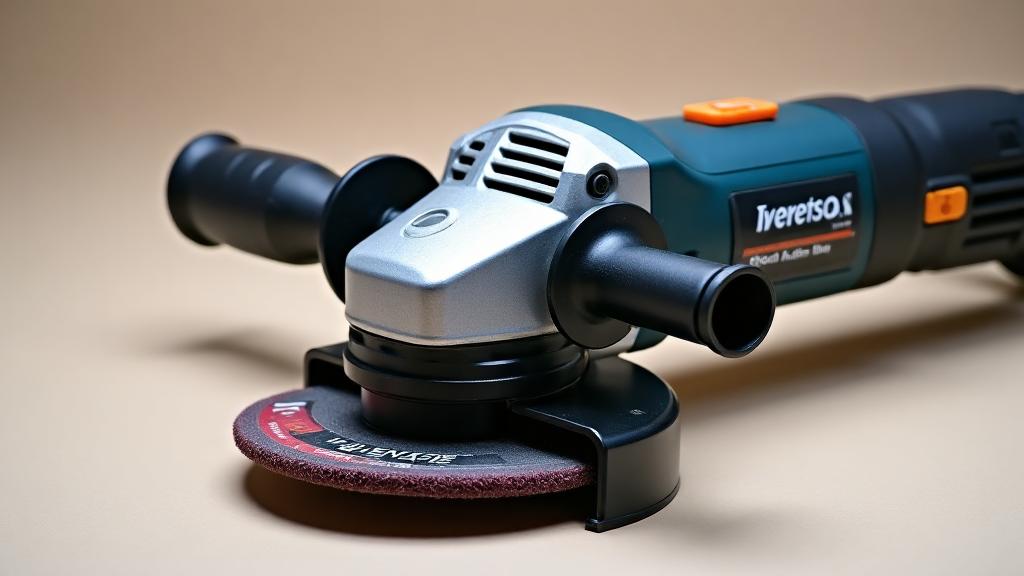
An angle grinder dust shroud encloses the grinding wheel and attaches to a vacuum hose. When you grind concrete, stone, or masonry, the shroud captures airborne silica dust before it spreads. A properly matched shroud with a high-CFM vacuum and a replaceable brush skirt can trap up to 95% of the silica dust. This helps you stay OSHA-compliant, extends wheel life, and reduces cleanup time. Dust shrouds are sold in multiple sizes and designs. For example, one universal model fits most 6” to 9” angle grinders and supports up to a 7” grinding wheel, with an adjustable collar that accepts sizes from 1.8” to 3”. Another shroud is designed for dry sanding or grinding of concrete and has a maximum collar size of 1-13/16". You can browse many shrouds for various grinder sizes and tasks. ### Decision Framework: Choosing a Dust Shroud
Use these ordered steps to select the right dust shroud for your angle grinder.
Step 1: Check your grinder's collar size. Measure the diameter of the collar (the ring behind the grinding wheel) where the shroud attaches. The shroud's compatible collar size range must include your grinder's measurement.
Step 2: Match the shroud to your grinder's wheel diameter. The shroud must fit over the size of grinding wheel you plan to use (e.g., 5”, 7”, or 9”).
Step 3: Confirm the shroud fits your grinder's overall size. Some shrouds specify which angle grinder sizes they fit, such as “fits most 6” to 9” angle grinders.” Step 4: Check the shroud's features. Look for a replaceable brush skirt (to maintain sealing), a vacuum port that matches your hose, and edge-grinding capability if you need to grind flush against walls. Step 5: Choose based on your primary task. For concrete grinding, use a shroud with a skirt and strong vacuum connection. For cutting, use a cutting dust shroud that encloses the blade. Step 6: Verify compatibility with your vacuum. The shroud should connect securely to a vacuum that provides high CFM (cubic feet per minute of airflow). ## Practical Takeaways
- A dust shroud is a fast, low-cost way to control silica dust. - Measure your grinder's collar size before buying; many shrouds specify a range like 1.8” to 3”. - Replaceable brush skirts maintain a good seal over time. - Edge-grinding ability (removable front edge) is useful for tight spaces. ---
Note: The information above is based on synthesis of product descriptions and a dedicated guide, not from independent hands-on testing.
References
- 7" DustBuddie Shroud w/18" Hose - Dustless Tools. https://dustlesstools.com/product/7-dustbuddie-shroud-w-18-hose
- Amazon.com: dust shroud. https://www.amazon.com/dust-shroud/s?k=dust+shroud
- Stadea Grinder Dust Shroud 5" for Angle Grinders Hand Grinders - Shop n Save Mart. https://www.shopnsavemart.com/grinder-dust-shroud-angle-hand/gdsd05stda00021p
- Ultimate Guide: Choose the Right Angle Grinder Dust Shroud - Defusco. https://www.defusco.com/angle-grinder-dust-shroud