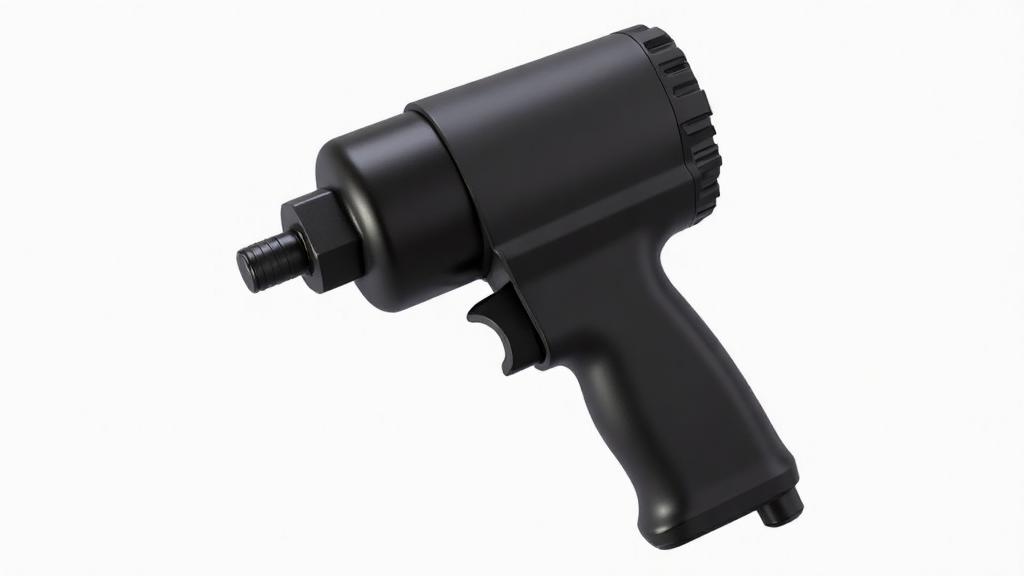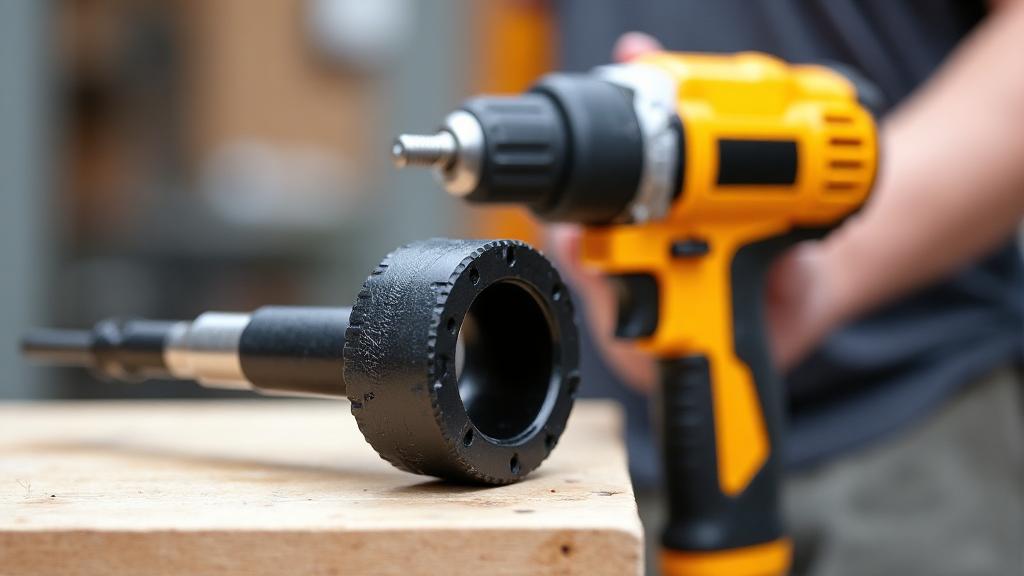
If you own a 1/2 in. impact wrench and need to occasionally drill holes or drive screws with hex-shank bits, an impact wrench to drill adapter offers a practical solution. These adapters convert the square drive into a hex chuck that accepts standard drill and driver bits, enabling you to use your impact wrench as a drill.
How the Adapter Works
The adapter fits over the impact wrench's drive lug. For example, a "1/2 in. to 1/4 in. quick change impact wrench adapter" transforms the wrench into a driver that accepts standard 1/4 in. hex bits. Similarly, a kit converting a 1/2 in. impact into a 3/8 in. drill is designed for hex-shank drill bits. The adapter must be impact-rated to handle the hammering action without cracking or slipping. ### Key Features to Look For
- Impact-rated construction: Look for adapters made from hardened steel or marked "impact" to withstand torque and vibration. - Quick-change mechanism: Many adapters feature a spring-loaded collet or locking sleeve for swapping bits without a chuck key. - Drive size compatibility: The adapter's square drive must match your impact wrench (common sizes: 1/2 in. and 3/8 in.). The output should be a 1/4 in. hex collet for most bits or a 3/8 in. chuck for larger bits. - Secure attachment: A set screw or retaining ring prevents the adapter from falling off; some kits include a retaining pin. ### What You Can and Cannot Do with the Adapter
| Can Do | Cannot Do |
|---|---|
| Drive hex-shank drill bits (e.g., for wood, metal, drywall) | Use round-shank drill bits without a three-jaw chuck |
| Drive hex-shank screwdriver bits (e.g., Phillips, flathead) | Drill with precision at low speeds (impact wrenches lack variable-speed control) |
| Quickly swap bits with a quick-release mechanism | Achieve the same runout accuracy as a dedicated drill |
| Use impact-rated sockets for fastening tasks | Transfer high torque to masonry bits (hammer action may shatter them) |
Source: Synthesized from consumer-market listings and retail descriptions. ### Important Constraints
- Torque limitations: Impact wrenches produce high rotational torque but lack precise speed control. Using a drill adapter with a large hole saw or masonry bit may stall the tool or damage the adapter. Start at low power and use steady pressure. - Chuck wobble: Even with a well-made adapter, some wobble may occur compared to a dedicated drill. This is acceptable for most fastening and light drilling but not for precision work. - Compatibility: Not all adapters fit all impact wrenches. Always verify the square drive size (1/2 in. vs. 3/8 in.) and anvil depth before purchasing. ### Decision Framework
Use these four ordered steps to select and use the right adapter:
#### Step 1: Identify Your Impact Wrench's Drive Size
- Check your tool's anvil. Common sizes: 1/2 in. (most common for full-size impact wrenches) and 3/8 in. (common on compact models). Note if it has a detent pin hole or a hog ring. #### Step 2: Choose the Adapter Type Based on Your Task
- For general drilling with hex-shank bits: Get a 1/2 in. to 1/4 in. quick-change hex adapter. This is the most versatile. - For large-hole drilling or screwdriving: Choose a kit with a 3/8 in. drill chuck adapter (e.g., the "Turn Your Impact Wrench Into A Drill" kit). - For socket use: Select an impact-rated socket adapter set with square-to-hex or square-to-square reducers. #### Step 3: Secure the Adapter Properly
- Slide the adapter fully onto the anvil. If your wrench has a detent pin, use the adapter's hole to lock it. If it has a hog ring, the adapter's internal groove must snap over it. Hand-tighten any set screw. #### Step 4: Test and Use Safely
- Insert a hex-shank bit (e.g., a #2 Phillips driver bit or a 1/4 in. drill bit) into the adapter's collet until it clicks. - Start the impact wrench at low speed and gradually increase. Apply steady pressure; avoid sideways leverage. ### Practical Takeaways
- When to use an impact wrench to drill adapter: For driving hex-shank bits, light drilling in wood, metal, or drywall, and when you need one tool for both fastening and drilling on the go. 2. When to use a dedicated drill instead: For precision drilling, large hole saws, or when variable speed and a true drill chuck are required. 3. Check durability: Always choose impact-rated adapters to avoid breakage. Consumer reviews indicate that cheap non-impact adapters crack after a few uses.