Losing project files, construction photos, or equipment manuals from your computer or storage device can be frustrating. This guide explains how to use MiniTool Power Data Recovery to retrieve lost data from hard drives, SSDs, USB drives, and memory cards, with ordered steps and a decision framework to help you choose the right approach.
Quick Answer
MiniTool Power Data Recovery is a file recovery tool designed to recover lost or deleted files from various storage devices on Windows 11/10/8, including USB drives and SD cards commonly used with power tools. The free edition allows you to recover up to 1GB of data without payment, which is sufficient for many small-scale recovery tasks.
What You Can Recover
The software can handle multiple data loss scenarios:
- Accidental deletion: Files deleted from the Recycle Bin, shift-deleted, or lost due to formatting errors.
- Corrupted or inaccessible drives: Data from drives that have suffered file system errors, virus attacks, or OS crashes.
- Partition issues: Recovery from lost, deleted, or damaged partitions.
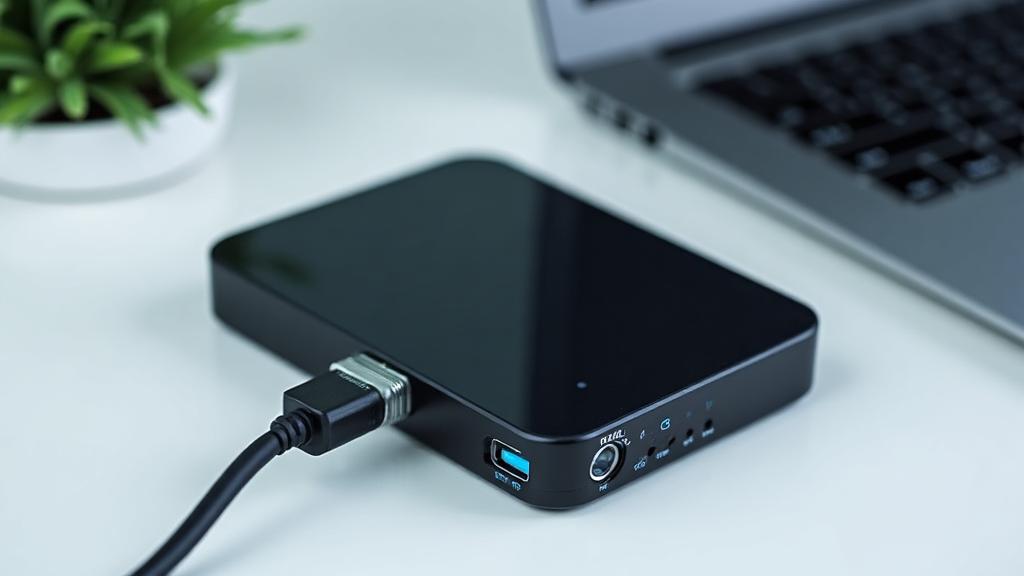
- Supported devices: Hard disk drives (HDDs), solid-state drives (SSDs), external hard drives, USB flash drives, memory cards, and more.
Decision Framework: Choose Your Recovery Path
Use this framework to decide whether the free edition meets your needs or if you should consider a paid upgrade.
| If you need to... | Recommended Edition | Key Tradeoffs (source-backed) |
|---|---|---|
| Recover a few small files (total < 1GB) | Free Edition | No cost; supports multiple devices and guided scans. Recovery limited to 1GB total. |
| Recover large or many files (total > 1GB) | Paid Edition (Personal, etc.) | No recovery cap; deep scans on large drives can be time-consuming regardless of edition. |
| Access advanced features (e.g., unlimited size, priority support) | Paid Edition | Some advanced features require a paid upgrade. Free version still offers quick and deep scanning options and file preview. |
Step-by-Step Recovery Guide
- Download and install MiniTool Power Data Recovery Free from the official website. The software works under Windows.
- Launch the software. The main dashboard presents categories like "This PC," "Removable Disk Drive," and "Hard Disk Drive" to simplify selecting your device.
- Select the location where you lost your data (e.g., your USB drive or internal hard drive).
- Choose a scan type:
- Quick Scan: For recently deleted files or simple recovery cases.
- Deep Scan: For more complex scenarios, such as formatted drives or corrupted partitions. This can be time-consuming for large drives.
- Preview recoverable files. The software allows you to preview many common file types before recovery.
- Select the files you want to recover and choose a destination folder (on a different drive to avoid overwriting).
- Free recovery limit: The free edition can only recover up to 1GB of data total.
- Time: Deep scans on large drives can be time-consuming.
- Always save recovered files to a different drive than the one you are scanning to avoid permanent loss.
- Start with the free edition if your lost data is under 1GB. It is user-friendly and supports guided scans.
- Preview before recovering to ensure you're choosing the correct files.
- If you encounter deep scan delays, consider upgrading to a paid version only if you need to recover more than 1GB of data.