Quick Answer
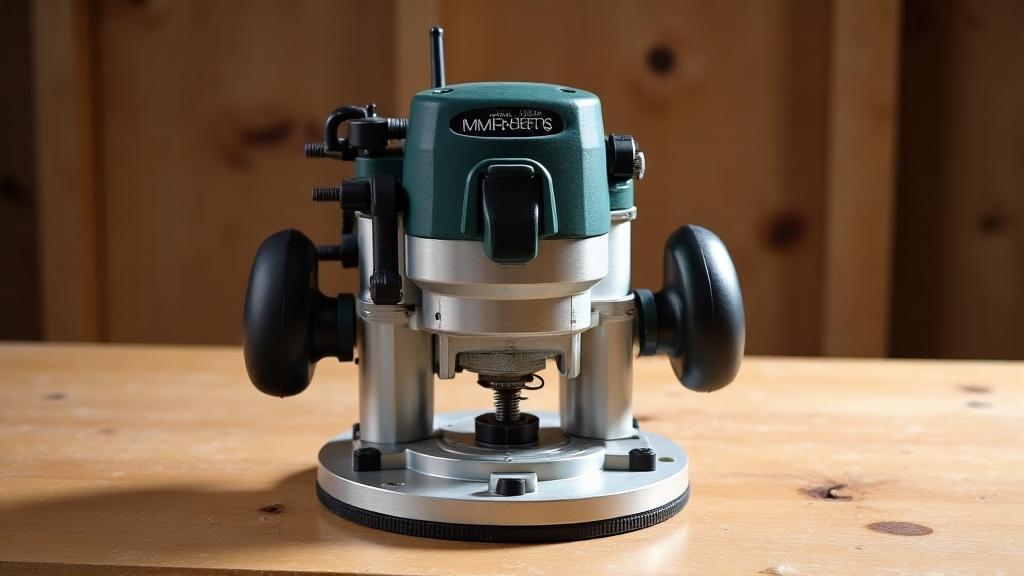
A woodworking router is a power tool with a flat base and a rotating bit that extends past the base, used to hollow out, shape, or trim wood and other materials. Your choice depends on the tasks you plan to do: for light trimming and edge work, a compact router (1.25 HP, 1/4" collet) may suffice; for joinery and heavier shaping, a midsize router (2–2.3 HP, 1/2" collet) is the most common and versatile option.
Main Explanation
Routers are essential for woodworkers of all skill levels because they can handle tasks ranging from decorative edges to precise joinery. The tool is driven by an electric motor (or, less commonly, a pneumatic motor) and can be used handheld with the bit pointed downward or mounted in a router table with the bit pointed upward.
Three‑Step Decision Framework
Use this ordered process to choose the right router for your woodworking projects:
Step 1 – Identify your primary tasks
- Edge profiling and light trimming: A compact router with 1.25 HP and a 1/4" collet (such as a 6.5 Amp fixed-base model with variable speed and accessories like an edge guide) is a good fit. These are also a popular choice as a second or third router.
- Joinery (dadoes, rabbets, dovetails) and heavy shaping: A midsize router in the 2–2.3 HP range that accepts 1/2" collets offers the power and stability needed for these operations. Full-size 3.5 HP routers exist but are often overkill for hobbyist work.
Step 2 – Choose the base type
- Fixed-base router: The base does not move; depth is set before starting. Good for edge work and when using a router table.
- Plunge-base router: The bit can be lowered into the work while the router is running. Ideal for mortising, grooves, and starting cuts in the middle of a workpiece.
- Combination (combo) router: One motor that can be swapped between a fixed base and a plunge base. Offers the most flexibility.
Step 3 – Match power to your work
- Compact (1–1.25 HP): Limited to 1/4" collet bits. Best for light duty.
- Midsize (2–2.3 HP): Accepts both 1/4" and 1/2" collets. This is the most common class for general woodworking and joinery.
- Full-size (3.5 HP): Heavy, expensive, and usually reserved for production or large-diameter bits.
Key Tradeoffs to Consider
| Feature | Compact Router | Midsize Router |
|---|---|---|
| Collet size | Typically 1/4" only | Accepts 1/4" and 1/2" |
| Horsepower | 1–1.25 HP | 2–2.3 HP |
| Best for | Trimming, laminate work, small edges | Joinery, dovetails, raised panels |
| Weight & cost | Lower | Higher |
Some modern cordless compact routers claim power similar to corded tools while adding portability, but if your projects regularly use 1/2" shank bits, a midsize corded router is the more capable choice.
Practical Takeaways
- Start with a midsize (2–2.3 HP) combo router if you can only buy one. It handles the widest range of home-shop tasks.
- Add a compact router later for quick edge work and when you need to move around the workpiece easily.
- Always use variable speed control and adjust speed based on bit diameter and material for safer, cleaner cuts.
- Secure your work and follow safety guidelines for routers to prevent kickback and maintain control.