Quick Answer
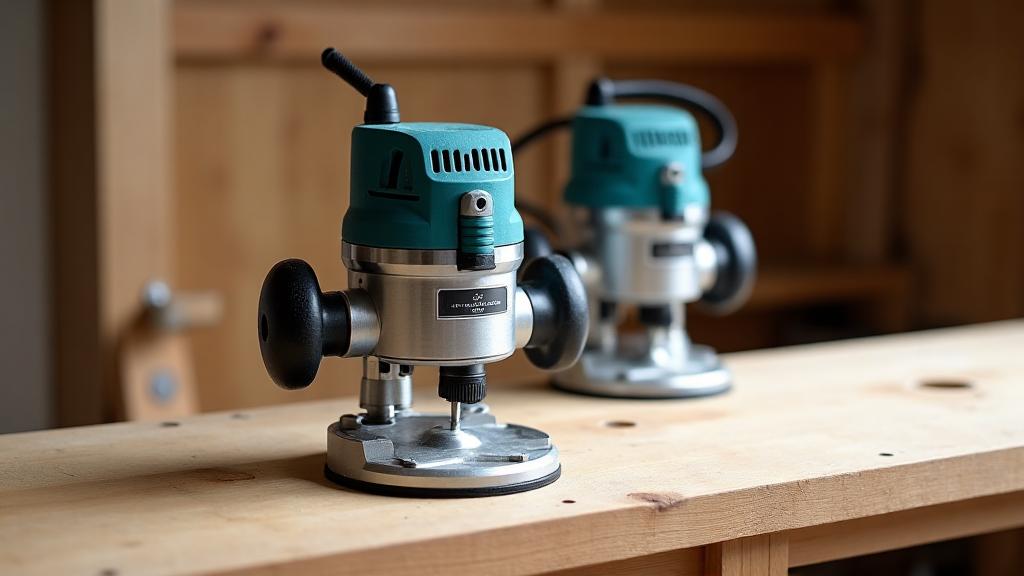
A woodworking router is a power tool with a flat base and a rotating bit that hollows out areas in wood or plastic. Focus on three key decisions: collet size, base type, and power range. The table below walks you through the ordered steps.
| Step | What to Decide | Why It Matters | Guideline |
|---|---|---|---|
| 1 | Collet size (¼" vs. ½") | Determines which bits you can use. Compact routers are limited to a ¼" collet. | If you plan to use ½"-shank bits for heavy work, choose a router with a ½" collet (midsize or full-size). |
| 2 | Base type (fixed, plunge, or combination) | Fixed base is lightweight for edge work; plunge base lets you start cuts in the middle of a board. Combination routers offer both bases. | For versatility, a combo router covers more tasks; for dedicated table use, a fixed base is often preferred. |
| 3 | Power range (compact, midsize, full-size) | Compact routers (typically <2 hp) are portable but limited to light trimming. Midsize routers (2–2.3 hp) balance power and weight. Full-size (3+ hp) suit production work. | “Compact routers … may be best as a second or third router purchase”. Start with a midsize if you are a hobbyist. |
> Desk research note: The claims above are based on published reviews and product listings; no hands-on testing was performed for this article.
Main Explanation
How a Router Works
A router spins a bit at high speed (often 10,000–30,000 RPM) using an electric or pneumatic motor. The bit extends below a flat base, and the tool is guided along the workpiece or mounted upside-down in a router table. Routers are used for joinery, edge profiling, grooving, and trimming [2,3].
Decision Framework: Three Ordered Steps
Step 1 – Collet Size
The collet holds the bit shank. Compact routers, including the top-selling model at one major retailer (the Milwaukee M18 FUEL 18V Brushless Cordless Compact Router), typically accept only ¼" shanks. Midsize and full-size routers accept both ¼" and ½" shanks, giving access to a wider variety of bits. If you want to use heavy ½" bits for rabbeting or grooving, skip the compact class.
Step 2 – Base Type
- Fixed-base routers are simple, light, and great for edge routing or mounting in a table.
- Plunge routers allow you to lower the bit into the material, ideal for mortises and started cuts [3,4].
- Combo routers include both bases, letting you switch without buying a second tool. For the highest versatility, choose a combination model.
Step 3 – Power Range
- Compact (<2 hp): Lightweight and cordless options (like the Milwaukee M18) are convenient for trim work but limited by the ¼" collet [1,5].
- Midsize (2–2.3 hp): The most common size for serious hobbyists. They offer enough power for most joinery and panel work while staying manageable.
- Full-size (3+ hp): Overkill for occasional use, but necessary for large bits and production runs.
Practical Takeaways
- If you are buying your first router, a midsize combination router (2–2.3 hp) provides the best trade-off of power, bit compatibility, and flexibility.
- For light trimming and portability, a compact router like the Milwaukee M18 works well as a second tool.
- Always use sharp, quality bits and follow safety practices, work in the direction opposite to the bit’s rotation to control kickback.
- Accessories such as router tables, jigs, and guide bushings expand what you can do; many retailers offer complete routing systems.
References
- Home Depot. Wood Routers category page. https://www.homedepot.com/b/Tools-Woodworking-Tools-Wood-Routers/N-5yc1vZ2fkp9a5
- Infinity Tools. Routing – Router Bits, Tables, Jigs & Accessories. https://infinitytools.com/collections/routing
- Wikipedia. Router (woodworking). https://en.wikipedia.org/wiki/Router_(woodworking)
- Woodcraft. Wood Routers for Woodworking Projects. https://www.woodcraft.com/collections/routers
- Popular Woodworking. Midsize Router Showdown: What’s the Best Router for Woodworking? https://www.popularwoodworking.com/toolreviews/midsize-router-showdown-whats-the-best-router-for-woodworking